
Description
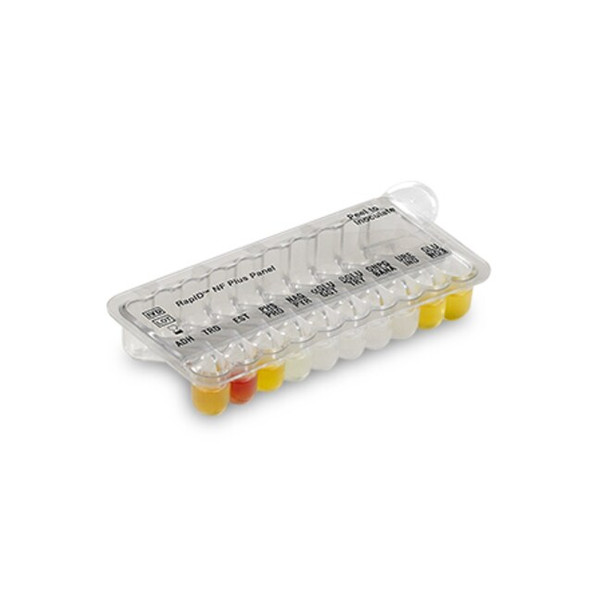
Identify more than 70 clinically significant, oxidase-positive, Gram-negative bacilli, including Vibrio species, in as little as four hours with the RapID™ NF PLUS System. This identification system is based on advanced enzyme technology, providing rapid and reliable results.
The RapID™ NF PLUS System is a qualitative micromethod that utilises conventional and chromogenic substrates for the identification of clinically important glucose non-fermenting, Gram-negative bacteria, as well as selected glucose-fermenting, Gram-negative bacteria that do not belong to the Enterobacteriaceae family and have been isolated from human clinical specimens.
Key Features
- Single-step inoculation – Reduced preparation time helps improve laboratory productivity.
- Simple manual microbial identification – No oil, pipetting, or 24-hour incubation required.
- Four-hour incubation* – Faster turnaround times enable quicker clinical decision-making.
- Standardised procedure – Reduced consumables usage helps save both time and costs.
- Clear colour reactions – Minimises subjectivity and reduces the need for repeat testing.
- Enhanced reporting capabilities – Broader organism coverage and advanced database updates.
*Two-hour incubation for RapID™ SS/u.
How It Works
The system consists of a clear plastic tray containing reagent-impregnated wells, enabling the simultaneous inoculation of each cavity with a predetermined volume of inoculum. A suspension of the test organism prepared in RapID™ Inoculation Fluid is used to rehydrate the reagents and initiate the test reactions.
Following incubation, each cavity is examined for reactivity by observing any colour development. In certain tests, additional reagents are added to produce a colour change. The resulting pattern of positive and negative reactions is then used to identify the test isolate by comparison with reactivity profiles stored within the database or through the use of the computer-generated Code Compendium (ERIC).
Related Products
Related Products


Hygiena™ SystemSURE Plus ™ ATP System
Hygiena

RapID™ Inoculation Fluid
OXOID
RapID™ Spot Indole Reagent
OXOID

Hygiena™ SystemSURE Plus™ Plus Keypad Each
Hygiena

GasPak™ EZ Campy Container System Sachets Pk 20
BD