Sustainable Cooling Incubators for Testing and Diagnostics — With UK based Manufacturer LMS
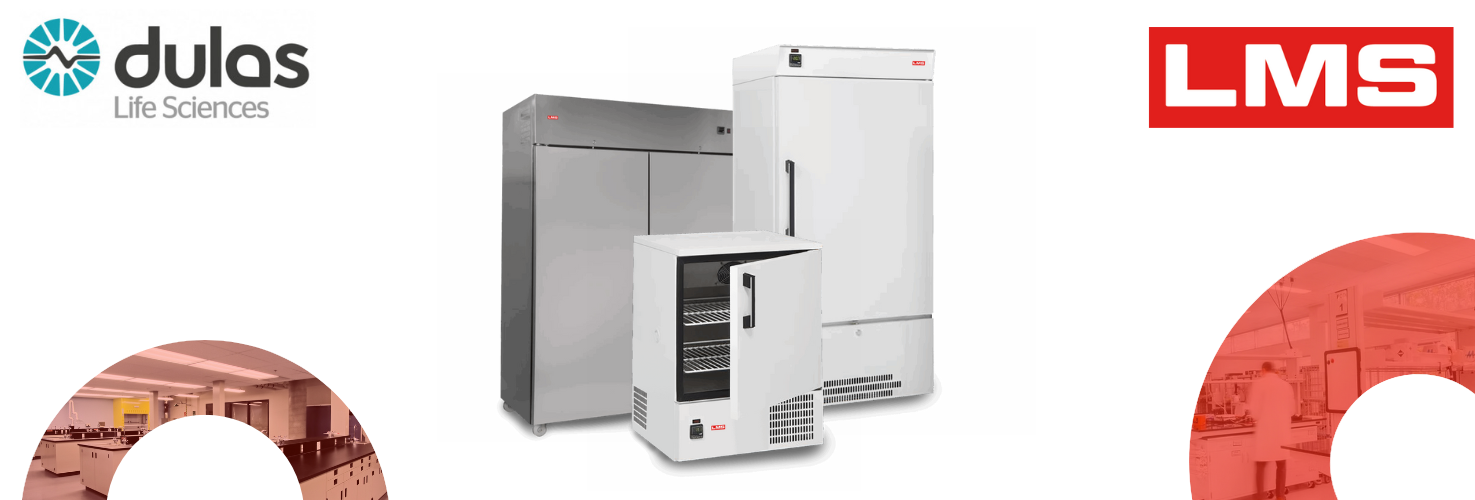
Across food safety, water quality, contract testing, clinical diagnostics or indeed research, cooled incubators are core to delivering accurate, compliant, and repeatable results. Sustainability targets are rightly raising the bar for equipment selection—but for most labs, the winning solution is one that pairs credible environmental performance with application‑ready functionality.
LMS cooling incubators are engineered around this principle: fit‑for‑purpose designs that support validated workflows, deliver long service life, and keep total cost and carbon low—without sacrificing the features your teams need day‑to‑day as well as their comfort.
Why “Fit‑for‑Purpose” Matters (and How LMS Applies It)
LMS focuses on the essentials for the commercial laboratory: reliable temperature control below and above ambient, uniformity across shelves, easy‑to‑use programming, and serviceable compressor‑based cooling suited to continuous operation.
What that means for you
- Stable temperature control for routine microbiology, QA, and diagnostics
- Uniform air circulation to minimise hot/cold spots and reduce repeat testing
- Programmable profiles for day/night cycles, cold stratification, or step tests
- Serviceable design that supports longevity and lowers lifetime environmental impact
- Clear UK compliance for responsible end‑of‑life (RoHS/WEEE), supporting procurement assurance
Application‑Led Benefits
1) Food Manufacturers & Food Testing Labs
Typical workflows: shelf‑life studies, pathogen and indicator organisms, fermentation/ripening assessments, environmental monitoring.
LMS advantages:
- Wide working range (at and below ambient) keeps protocols consistent year‑round—even in warmer QA rooms.
- Uniformity across shelves improves reproducibility for batch comparisons and challenge tests.
- Programmable temperature steps simulate day/night or seasonal profiles for stability and ripening studies.
- Low hassle operations: intuitive controls and clear displays reduce setup time, training overhead, and operator error.
Sustainability in practice: robust insulation and stable cooling reduce excess heat into lab spaces—lowering indirect HVAC load and supporting site‑level energy reduction.
2) Water Testing (BOD, Environmental & Microbiological)
Typical workflows: BOD₅/BOD₇, coliform/indicator organisms, sediment/soil sample incubation, method compliance.
LMS advantages:
- Compressor‑based cooling excels at sub‑ambient set points common to BOD testing.
- Fast recovery after door openings helps maintain method compliance across multiple daily runs.
- Capacity options support high‑throughput racks and multi‑study configurations without crowding.
- Simple validation: stable controls and consistent performance streamline method checks and audit documentation.
Sustainability in practice: long service life and local serviceability reduce replacements and electronic waste over time.
3) Contract Testing Laboratories
Typical workflows: mixed client studies in food, pharma, environmental, consumer goods; rapid turnarounds; multi‑method scheduling.
LMS advantages:
- Flexible programming to run sequential profiles across different client protocols.
- Chamber uniformity reduces retest rates and protects turnaround times.
- Reliability under continuous load keeps SLAs intact and downtime minimal.
- Straightforward cleaning and maintenance to meet internal QA and client audits.
Sustainability in practice: fit‑for‑purpose spec avoids unnecessary electronics and standby loads—helping you hit sustainability KPIs without compromising throughput.
4) Clinical Diagnostics (NHS & Private)
Typical workflows: incubation for microbiology screening, sample stability windows, routine diagnostic studies.
LMS advantages:
- Stable, repeatable temperature control for validated diagnostic protocols.
- User‑friendly interfaces reduce training time and support shift handovers.
- Serviceable UK supply chain helps maintain uptime and compliance documentation.
- Noise‑conscious operation and robust construction fit well in busy clinical environments.
Sustainability in practice: durable, repairable units support whole‑life carbon reduction by limiting replacements and simplifying responsible end‑of‑life handling. Robust insulation and stable cooling reduce excess heat into lab spaces—lowering indirect HVAC load and supporting site‑level energy reduction.
5) University Research & Teaching Labs
For mixed research and teaching use, LMS offers reliable baseline capability—ideal where projects vary and equipment must be versatile, easy to use, and robust under frequent hands‑on use.
LMS Functionality at a Glance
- Temperature Range: Controlled operation below and above ambient (typical low‑temperature set points for BOD and cold stratification, plus mid‑range incubation for microbiology and QA).
- Uniformity: Designed airflow for even conditions across shelves—reducing “edge effects” and reruns.
- Programmable Profiles: Day/night cycles, ramps, and step tests for stability or method simulation.
- Capacity & Configuration: Multiple chamber sizes and adjustable shelving for flasks, racks, or trays.
- Build Quality: Laboratory‑grade construction and effective insulation for steady‑state performance.
- Ease of Use: Intuitive controls, clear displays, simple parameter entry; fast recovery after door events.
- Serviceability: Compressor technology widely supported by UK service providers; spares and maintenance is
- Compliance Support: UK RoHS/WEEE obligations and documentation for responsible procurement and disposal.
Bottom line: You get the functions you need for regulated, high‑throughput testing—without paying for features you don’t use.
Sustainability That Supports Operations
- Whole‑life impact: Durable, repairable designs reduce the carbon and waste associated with frequent equipment turnover.
- Lower secondary energy demand: Stable thermal performance and insulation help minimise heat rejection, supporting site‑wide energy goals.
- Responsible procurement: Clear UK regulatory compliance simplifies environmental due diligence (RoHS/WEEE).
- Using only the technology you actually need — and avoiding features that must run all the time — reduces wasted energy when the unit isn’t actively changing temperature and lowers the environmental impact of manufacturing and replacing the equipment.
Practical sustainability steps: fewer retests, fewer replacements, and a smaller footprint—while your lab meets its daily workload.
Checklist for selecting the right model?
- Food & QA - Prioritise chamber uniformity and programmable profiles.
- Water/BOD - Focus on sub‑ambient stability, recovery times, and capacity for sample racks.
- Contract testing - Choose flexible programming and mid‑to‑large capacity with strong uniformity.
- Clinical diagnostics - Emphasise repeatability, ease of use, and service support.
LMS cooling incubators are available across multiple capacities and configurations to match these needs, with features that keep your workflows compliant, efficient, and sustainable.
Recent Posts
-

Sustainable Petri Dishes in Modern Microbiology Laboratories: Choosing the Right Vented Solution
Microbiology laboratories today face the challenge of balancing accuracy, efficiency and sustainabil …24th Jun 2026 -
Sustainable Cooling Incubators for Testing and Diagnostics — With UK based Manufacturer LMS
Across food safety, water quality, contract testing, clinical diagnostics or indeed research, coole …13th Jan 2026 -

Meet Claire Hill, Our Clinical Diagnostics Sales Manager
If you haven't already heard the news, we're delighted to tell you that Claire Hill has joined Trafa …22nd Jan 2024